Mon to Sat: 8:00 am - 6:00 pm
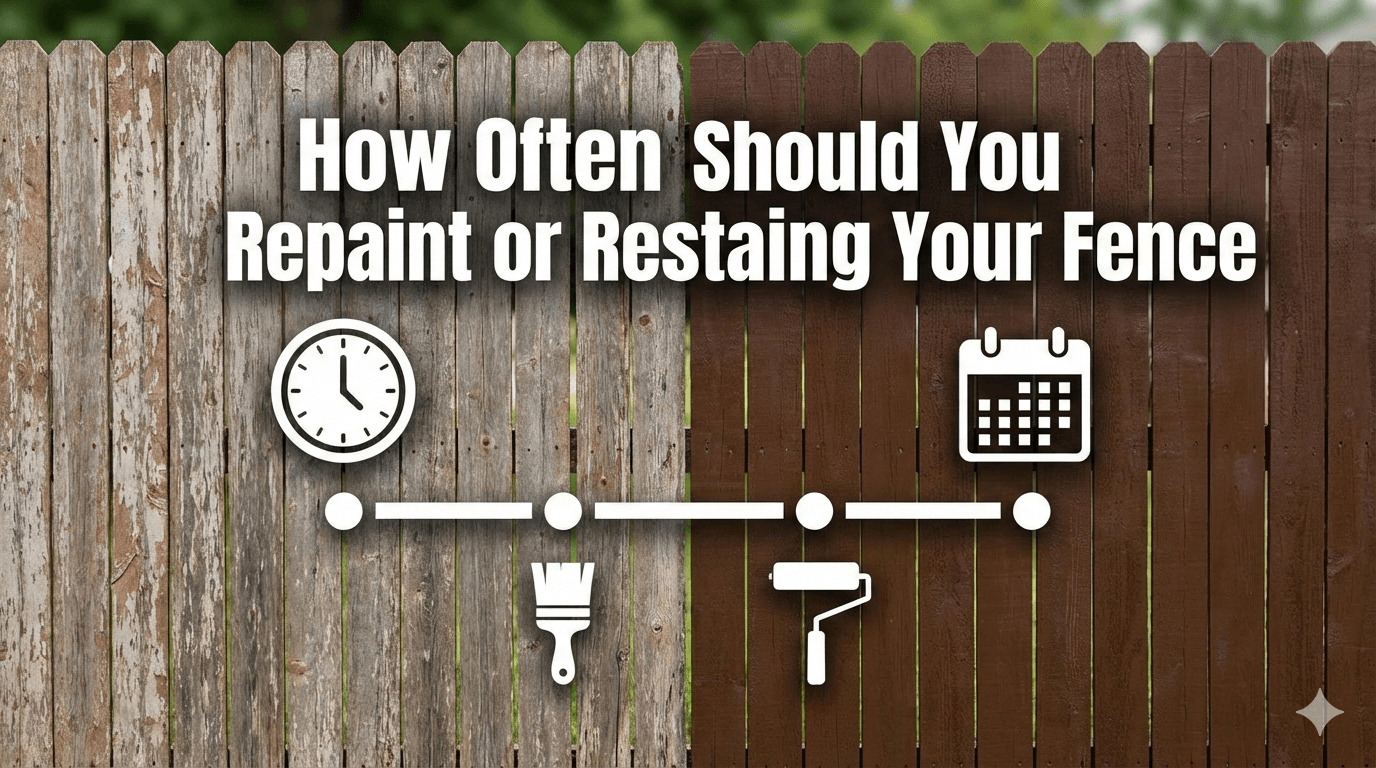
Your fence does more than define your property line—it adds curb appeal, provides privacy, and protects your outdoor space. But because it’s constantly exposed to sun, rain, humidity, and temperature changes, it needs regular care to stay strong and attractive. One of the most common questions homeowners ask is how often a fence really needs repainting or restaining. The answer depends on the fence material, the local climate, and how well it was prepared and maintained in the past.
In this guide, I’ll walk you through when to repaint or restain your fence, how often it should be done, what products last the longest, and how to keep your fence looking great between major updates.
A fence doesn’t always fail overnight—there are warning signs that tell you it’s time for attention. Peeling paint, fading color, visible cracks, mildew, or wood that absorbs water instead of repelling it are all clear indicators. If your fence looks dull or feels rough to the touch, the protective layer is likely wearing off.
Climate plays a big role here. In areas with strong sun, high humidity, or frequent rainfall, finishes break down faster. If you’re unsure, a quick water test helps: sprinkle water on the fence. If it soaks in quickly, it’s time to repaint or restain.
After the first couple of hundred words, it’s worth noting that working with an experienced Fence painter in Asheville, NC can help you determine the right timing and product based on local weather conditions and wood types commonly used in the area.
Paint creates a solid protective film over wood, which makes it last longer—but it also means failure is more visible when it happens. On average, a painted wooden fence should be repainted every 3 to 5 years.
However, the timeline can shorten if:
The fence receives direct sunlight most of the day
Moisture gets trapped under peeling paint
Lower-quality paint was used previously
High-quality exterior latex paint, proper priming, and good surface prep can push that repainting cycle closer to five years or more.
Stain penetrates the wood instead of sitting on top of it, which allows the fence to breathe and age more naturally. Because of this, stain usually requires more frequent application than paint.
Typical restaining timelines:
Clear or transparent stain: every 1–2 years
Semi-transparent stain: every 2–3 years
Solid stain: every 3–4 years
If your fence is exposed to heavy sun or rain, expect to restain on the shorter end of these ranges. The upside is that stain fades more evenly and is easier to refresh than peeling paint.
Choosing the right product makes a huge difference in longevity. For paint, look for exterior-grade, mildew-resistant latex paint designed specifically for wood surfaces. These paints flex with temperature changes and resist cracking.
For stains, oil-based stains penetrate deeply and offer excellent water resistance, while modern water-based stains are more eco-friendly and easier to clean up. Solid stains offer the most UV protection, while transparent stains highlight natural wood grain but provide less defense against the elements.
Ask yourself a few key questions:
Do I want to see the natural wood grain? (Choose stain)
Do I want maximum color consistency and protection? (Choose paint or solid stain)
How much maintenance am I willing to do? (Paint lasts longer, stain is easier to refresh)
Matching the product to your fence’s exposure and your maintenance expectations is the key to long-term results.
Preparation is just as important as the product itself. Skipping prep is the fastest way to shorten the life of your finish.
Essential prep steps include:
Cleaning the fence thoroughly (pressure washing or scrubbing)
Removing peeling paint or old stain
Sanding rough or splintered areas
Repairing loose boards or nails
Allowing the fence to dry completely
Proper prep ensures better adhesion and a longer-lasting finish.
You can extend the life of your fence finish with simple maintenance:
Rinse off dirt and pollen once or twice a year
Trim vegetation away from the fence
Check for moisture damage or loose boards
Touch up small problem areas early
These small efforts can delay full repainting or restaining by a year or more.
Q: How do I know if my fence needs paint or stain instead of just cleaning?
A: I look for fading, peeling, or water absorption. If cleaning doesn’t restore the color or water beads no longer form, it’s time to refinish.
Q: Can I stain over paint or paint over stain?
A: I know that stain won’t penetrate paint, so paint must be removed first. I can paint over stain, but only after proper cleaning and priming.
Q: What time of year is best to repaint or restain my fence?
A: I prefer late spring or early fall when temperatures are moderate and humidity is lower for better drying and curing.
Q: Is it better to DIY or hire a professional?
A: I can DIY small fences, but for large areas or long-lasting results, professional prep and application often save time and money in the long run.